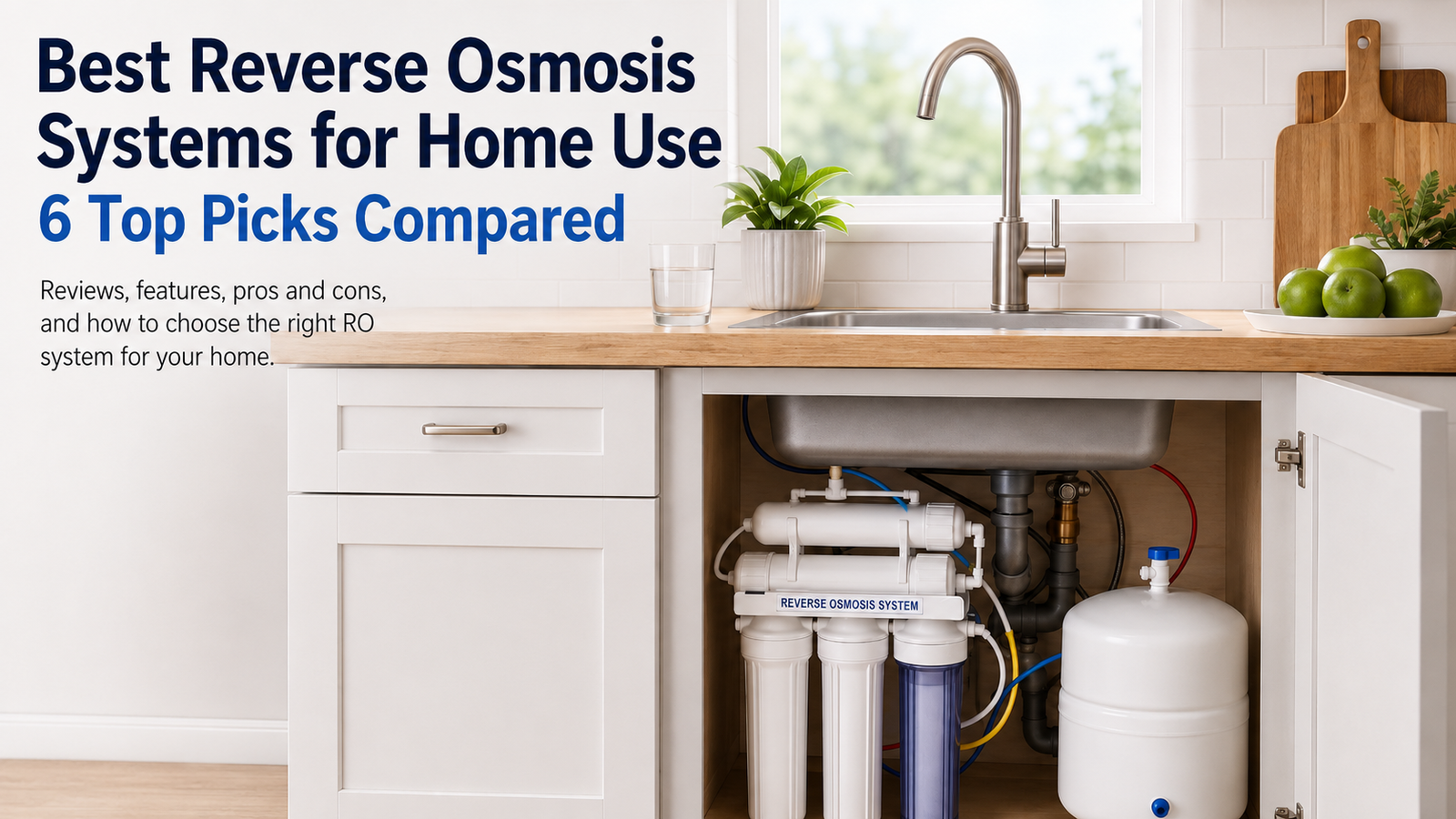
Choosing the best reverse osmosis system for your home involves more than comparing the number of filtration stages. Differences in water output, cabinet space, wastewater efficiency, maintenance costs, and certification can make one system far more suitable than another.
For this guide, we compared six systems that serve different homeowner needs: conventional tank systems, a high-output tankless model, a countertop option for renters, and systems that add minerals back after filtration. We focused on documented specifications, third-party certifications where available, installation requirements, and long-term practicality, not simply the number of filtration stages.
Quick Comparison
| System | Best for | Type | Rated output | Remineralization | Electricity |
|---|---|---|---|---|---|
| Home Master TMAFC-ERP | Best overall | Tank + permeate pump | 75 GPD | Yes | No |
| Waterdrop G3P800 | Best tankless | Tankless under-sink | 800 GPD | Package-dependent | Yes |
| iSpring RCC7 | Best value | Traditional tank | 75 GPD | No | No |
| APEC ROES-50 | Best simple tank system | Traditional tank | 50 GPD | No | No |
| AquaTru Classic | Best countertop option | Countertop | Batch-style | No | Yes |
| Aquasana SmartFlow RO | Best certified coverage | Traditional under-sink | See current specs | Yes | No |
Rated output is measured under specified test conditions. Actual production can vary with incoming water pressure, temperature, dissolved-solids levels, filter condition, and household use.
1. Home Master TMAFC-ERP — Best Overall
The Home Master TMAFC-ERP earns our best-overall position because it combines traditional reverse osmosis reliability with remineralization, a non-electric permeate pump, and improved wastewater efficiency.
The permeate pump helps move purified water into the storage tank without relying entirely on tank backpressure. That can improve production and reduce the amount of water sent to the drain. Home Master lists the system at 75 gallons per day and states a one-to-one wastewater-to-purified-water ratio under its test conditions.
Its Full Contact design adds calcium and magnesium back after reverse osmosis. That may appeal to buyers who dislike the flatter taste sometimes associated with highly purified water.
What it does well
Adds minerals back after filtration
Does not require an electrical outlet
Uses catalytic carbon for chlorine and chloramine reduction
Permeate pump can improve tank performance
Offers a strong balance of performance and long-term practicality
What to consider
The tank and filter assembly require significant cabinet space
Installation is more involved than with a basic five-stage system
Some performance claims come from manufacturer documentation rather than whole-system certification
Replacement filters may cost more than generic cartridges
Best for: Homeowners who want a traditional under-sink system with remineralization and better efficiency than a basic tank setup.
2. Waterdrop G3P800 — Best Tankless System
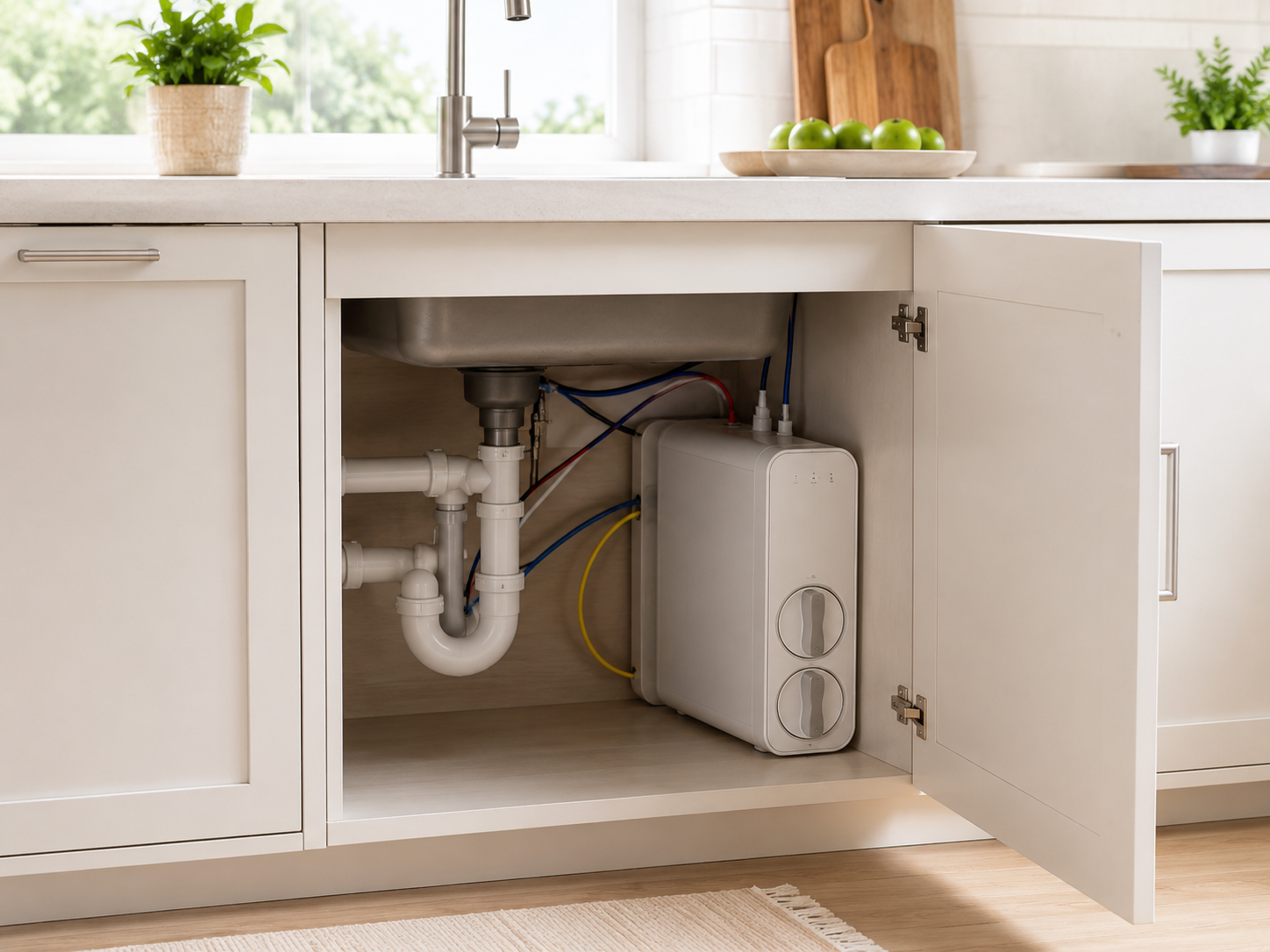
The Waterdrop G3P800 is the strongest option here for households that want fast, on-demand RO water without a storage tank.
Waterdrop rates it at 800 gallons per day and approximately 0.8 gallons per minute. Its tankless layout also frees cabinet space that would otherwise be occupied by a pressurized storage tank.
Waterdrop states that the G3P800 produces approximately three gallons of purified water for every gallon directed to the drain. Check the exact package carefully because remineralization may be included only with the alkaline version or as an add-on filter.
What it does well
High-rated production capacity
Fast dispensing
Tankless design saves cabinet space
Smart faucet displays water quality and filter status
Efficient manufacturer-stated pure-to-drain ratio
What to consider
Requires an electrical outlet under the sink
Costs substantially more than conventional tank systems
Uses proprietary replacement cartridges
The pump produces some operating noise
Remineralization is not included in every package
Best for: Larger households that value fast dispensing, compact tankless design, and smart monitoring more than the lowest upfront cost.
3. iSpring RCC7 — Best Value
The iSpring RCC7 is a practical entry point for homeowners who want a conventional reverse osmosis system without paying for smart controls, a booster pump, or remineralization.
It uses a five-stage process with sediment, granular activated carbon, carbon block, an RO membrane, and a final polishing filter. The system is rated at 75 gallons per day and works from normal household water pressure without electricity.
Its biggest advantage is value. The RCC7 uses widely available, standard-size replacement filters, which can make long-term maintenance more affordable and provide more flexibility than systems that require proprietary cartridges.
What it does well
Affordable initial purchase
Standard replacement-filter sizes
No electricity required
75-GPD rating is adequate for typical kitchen use
Familiar and serviceable five-stage design
What to consider
The storage tank occupies cabinet space
The standard RCC7 does not add minerals back
Water production depends heavily on incoming pressure
It lacks the continuous flow of premium tankless models
Buyers should not confuse it with the RCC7AK alkaline model
Best for: Budget-conscious homeowners who want a conventional, repairable RO system with readily available filters.
4. APEC ROES-50 — Best Simple Traditional System
The APEC ROES-50 is a straightforward five-stage system for buyers who prefer uncomplicated equipment over electronic features.
It includes a sediment filter, two carbon-block stages, a 50-GPD membrane, a final polishing filter, and a pressurized storage tank. One useful difference from some budget systems is its use of two carbon-block prefilters rather than a granular carbon stage followed by a single block. The configuration is designed to protect the RO membrane and reduce chlorine before water reaches it.
What it does well
Simple non-electric operation
Standard-size replacement filters
Dual carbon-block prefiltration
Easy-to-understand maintenance
Suitable for ordinary drinking and cooking demand
What to consider
The 50-GPD rating is lower than the iSpring RCC7
It requires room for both the filter assembly and tank
It does not include remineralization
The traditional design may send more water to the drain than newer systems
Best for: Buyers who value simplicity, standard components, and a conventional RO design.
5. AquaTru Classic — Best Countertop System
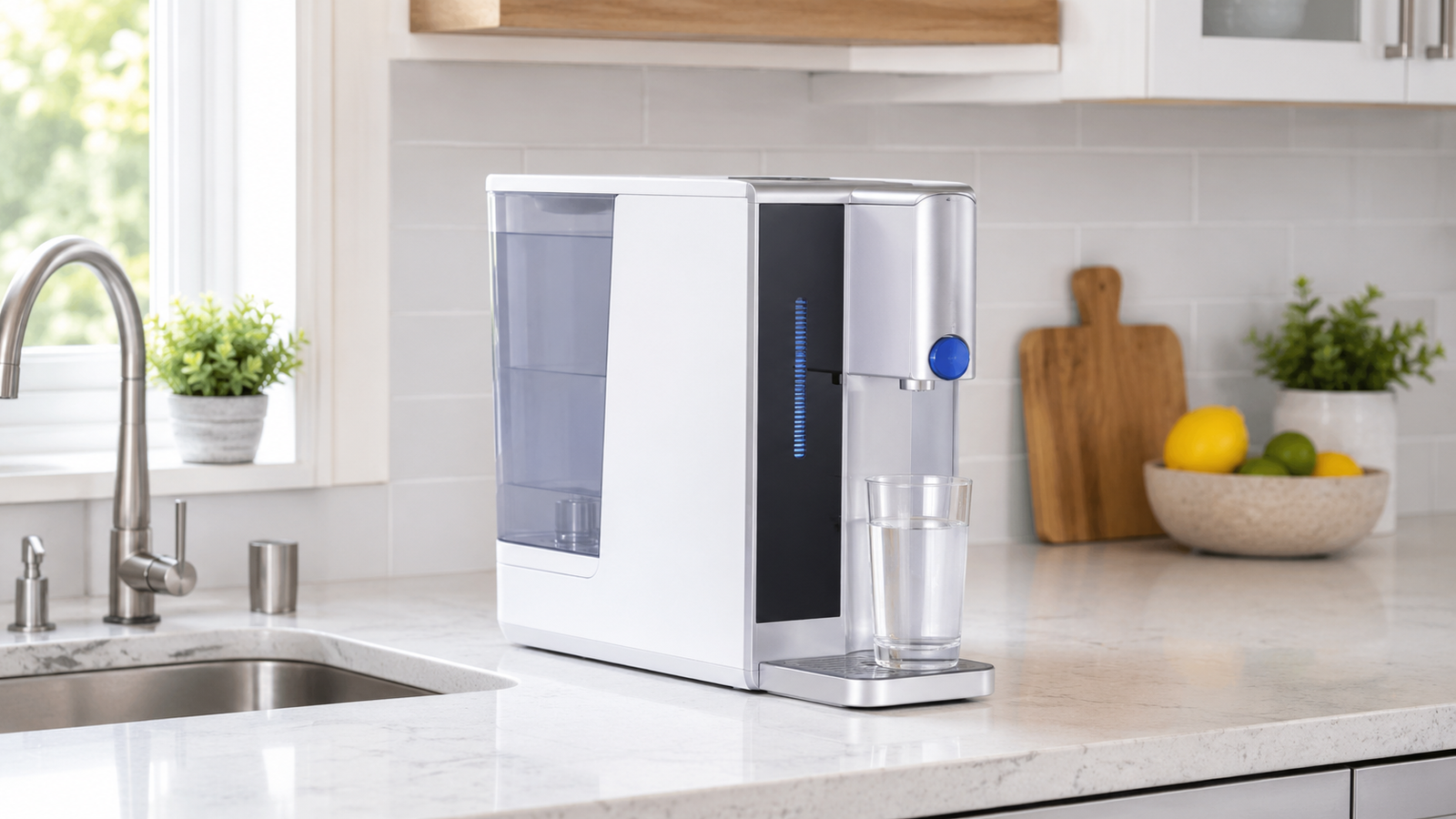
The AquaTru Classic is the most practical option in this group for renters, apartment residents, or anyone who cannot install a dedicated faucet and drain connection.
Instead of connecting permanently to household plumbing, the user fills a removable tap-water reservoir. The machine processes the water and stores it in a separate clean-water container. This makes setup easy, although it also means manually refilling the source-water tank and emptying the reject-water reservoir.
AquaTru publishes independent testing and certification information for a broad range of contaminant-reduction claims. Buyers should review the current performance data sheet for the exact model before purchasing.
What it does well
No plumbing modifications
Suitable for renters
Easy to move between homes
Provides a genuinely different option from under-sink systems
Relatively long filter-change intervals
What to consider
Occupies counter space
Requires electricity
Produces water in batches rather than continuously
The source-water tank must be refilled manually
The reject-water reservoir must be emptied
Best for: Renters and households that want RO filtration without changing the plumbing.
6. Aquasana SmartFlow RO — Best for Certified Contaminant Coverage
The Aquasana SmartFlow RO stands out for buyers who care most about documented reduction of a broad range of contaminants.
It combines an RO membrane with Aquasana’s Claryum carbon filtration and a remineralization stage. Aquasana publishes performance documentation covering many specific contaminants. That is more useful than relying on a broad marketing statement such as “removes up to 99%.”
As with every system in this guide, buyers should verify the exact model’s current certification listing and performance data sheet before relying on a specific contaminant claim.
What it does well
Broad documented contaminant-reduction claims
Combines RO and advanced carbon filtration
Designed to reduce chlorine and chloramines
Includes remineralization
No electrical outlet required
What to consider
Replacement filters are proprietary
Replacement costs may be higher than for standard-cartridge systems
The membrane replacement interval may be shorter than for some traditional systems
The storage tank and system require cabinet space
Best for: Households prioritizing documented reduction of many specific contaminants over the lowest maintenance cost.
How to Choose the Best Reverse Osmosis System for Your Home
The best reverse osmosis system for one household may not be the best choice for another.
Tank vs. Tankless
Traditional tank systems store purified water in a pressurized tank. They are usually less expensive, do not require electricity, and use familiar replacement filters. The tradeoffs are cabinet space and slower recovery after the tank is emptied.
Tankless systems produce water on demand. They can provide faster flow, use less cabinet space, and often include digital monitoring. They also tend to cost more, require electricity, and use proprietary replacement cartridges.
Choose a tank system when simplicity and lower cost matter most. Choose tankless when fast dispensing and cabinet space are higher priorities.
Look Beyond the Number of Stages
More filtration stages do not automatically mean better water. A well-designed five-stage system can outperform a poorly documented seven- or eight-stage system. What matters is what each stage does, whether the exact model has independent certification, and whether the filtration media match the contaminants in your water.
Check the Exact Certification
Terms such as “NSF components,” “tested to NSF standards,” and “NSF certified” do not necessarily mean the same thing. Certification should apply to the exact system or model—not merely one faucet, housing, or filter component. The performance data sheet should identify the specific contaminants and reduction levels covered by the certification.
Know Whether Your Utility Uses Chlorine or Chloramine
Many municipal systems disinfect water with chlorine, while others use chloramine. Standard activated carbon handles chlorine well, but chloramine can require longer contact time or catalytic carbon. Your annual water-quality report or local utility website should identify the disinfectant used in your area.
Check Your Water Pressure
Reverse osmosis performance depends heavily on incoming water pressure. Low pressure can reduce production, slow tank recovery, and increase the amount of water sent to the drain. A simple pressure gauge attached to an outdoor spigot or utility connection can help determine your home’s pressure before purchase.
Understand Wastewater Claims
Every RO system sends some water to the drain while flushing contaminants away from the membrane. Manufacturers often express efficiency as a ratio, but the direction is not always clear. Purifying three gallons for every one gallon drained is relatively efficient; purifying one gallon for every three gallons drained is much less efficient. Real-world performance can vary with pressure, temperature, dissolved-solids levels, membrane age, and filter condition.
Consider Filter Costs Before Buying
The purchase price is only part of the total cost. Check how often each filter is replaced, whether cartridges are proprietary, the cost of a complete annual filter set, membrane replacement cost, electricity use, and whether professional installation is likely.
Measure the Available Space
Do not rely only on the product’s listed dimensions. You also need clearance for tubing, shutoff valves, filter removal, a storage tank, electrical plugs, drain connections, and future servicing. Measure cabinet width, height, and depth before ordering.
Frequently Asked Questions
Which reverse osmosis system is best for most homes?
For many homeowners, a traditional under-sink system offers the best balance of cost, filtration, maintenance, and reliability. The Home Master TMAFC-ERP is our overall pick because it combines remineralization, a non-electric permeate pump, and a more efficient traditional design. Homeowners who want faster dispensing and less cabinet clutter may prefer the Waterdrop G3P800.
Is tankless reverse osmosis better than a tank system?
Not always. Tankless systems usually provide faster on-demand water, save space, and include more monitoring features. Traditional tank systems are generally less expensive, quieter, easier to repair, and do not require electricity.
How much water does reverse osmosis waste?
It varies considerably. Older or basic systems may send several gallons to the drain for every gallon purified. Newer systems with pumps or improved membrane technology may produce several gallons of purified water for every gallon drained. Manufacturer ratios should be treated as test-condition estimates rather than guaranteed household results.
Does reverse osmosis remove beneficial minerals?
RO membranes reduce dissolved minerals along with many unwanted contaminants. This can give the water a flatter taste. Some systems include a remineralization stage that adds small amounts of calcium or magnesium back after filtration.
How often do reverse osmosis filters need replacement?
Most sediment and carbon prefilters require replacement every six to twelve months. Postfilters are commonly replaced annually, while RO membranes may last from one to several years. Actual filter life depends on household use, source-water quality, sediment levels, disinfectant exposure, hardness, and the manufacturer’s recommendations.
Can reverse osmosis remove PFAS, lead, fluoride, and microplastics?
RO technology can reduce many dissolved contaminants, but buyers should verify the claims for the exact system. Do not assume every RO product has been independently certified for PFAS, lead, fluoride, microplastics, or any other specific contaminant. Check the model’s certification listing and performance data sheet.
Final Verdict
The best system depends on the problem you are trying to solve.
Choose the Home Master TMAFC-ERP for the strongest overall balance of efficiency, remineralization, and conventional reliability.
Choose the Waterdrop G3P800 when fast tankless dispensing and cabinet space matter most.
Choose the iSpring RCC7 for affordable, serviceable filtration with standard replacement components.
Choose the APEC ROES-50 for a simple traditional system without electronic features.
Choose the AquaTru Classic when permanent plumbing changes are not practical.
Choose the Aquasana SmartFlow RO when documented reduction of a broad range of specific contaminants is your highest priority.
Before buying, check your local water report, measure the available space, confirm the household water pressure, and review the exact replacement filter costs. Those details often matter more than the filtration-stage count printed on the box.
As an Amazon Associate, BuildSafeHome earns from qualifying purchases
This article may contain affiliate links. BuildSafeHome may earn a commission at no extra cost to you